How creators actually join affiliate programs
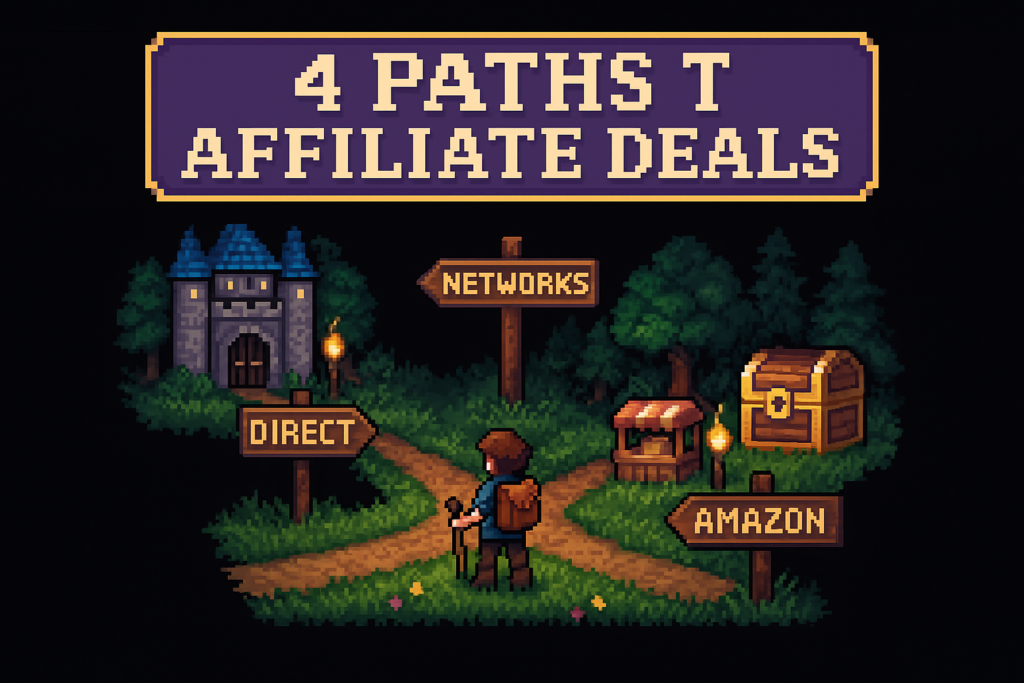
How creators join affiliate programs usually comes down to four paths: direct brand applications, affiliate networks, Amazon Associates, or no-application marketplace deals. The best route depends more on audience fit, content quality, and promotion method than on follower count alone.
Creators usually get into affiliate programs through four routes: direct brand programs, affiliate networks, Amazon Associates, or Marketplace deals. The best option depends less on raw follower count and more on audience fit, content quality, and whether you're ready to monetize consistently.
Direct brand affiliate programs
This is the old-school path. You find a brand's affiliate page, fill out its form, and apply directly to that specific program.
Direct brand programs usually ask for the same core inputs: your website or social links, audience details, traffic or engagement data, and how you plan to promote the product. Some are simple. Others feel closer to creator partnership onboarding than a basic signup form.
The upside is control. You're building a one-to-one relationship with the brand, not just getting access to a dashboard. That can matter later if you want custom terms, coupon codes, early product access, or a deeper affiliate partnership.
The tradeoff is friction. Premium or niche brands often review applications manually, and they can be selective.
A realistic example: a skincare YouTuber with 8,000 subscribers applies directly to a clean beauty brand she already features in ingredient comparison videos. She includes her channel link, a short note explaining that her audience cares about fragrance-free formulas, and two examples of prior product mentions. The brand takes two weeks to review, then approves her because the fit is obvious.
By contrast, a network gives you broader access faster. However, a direct application can create a stronger relationship and sometimes better payout potential over time.
Myth: every affiliate program requires a formal pitch.
Reality: many direct programs only need a clear, credible application. You don't need a polished sales letter. You need proof that you already create the kind of content the brand wants associated with it.
If you want a stronger system before you apply, this guide on brand deal outreach pairs well with a broader look at affiliate partnerships for creators.
Affiliate networks for creators
Affiliate networks are the middle layer between creators and brands. Platforms like Impact, ShareASale, CJ Affiliate, and Rakuten Advertising let you create one account, then browse and apply to multiple brand programs inside that system.
This is where a lot of creators get confused. Getting accepted to the network and getting accepted to a brand inside the network are often two separate steps.
That structure has real advantages. Networks centralize reporting, payouts, and link generation. If you're building a repeatable partnership pipeline, that's useful. Instead of juggling ten different brand dashboards, you can manage much of the work in one place.
The friction is medium, not low. Some brands inside Impact or ShareASale are beginner-friendly and approve quickly. Others still review manually and want to see a clear niche, active content, and a credible promotional method.
A common scenario: a home office blogger joins Impact because several standing desk and monitor brands she already mentions are there. She gets approved to the network quickly, then applies to four brands. Within a week, one says yes, one says no, and two stay pending. That's normal. The network opened the door, but each brand still made its own decision.
Compared with applying directly, networks give you broader access and cleaner operations. Compared with Amazon Associates, they usually offer more private-program variety but more approval friction.
Myth: you need a huge following to join affiliate programs.
Reality: many brands inside networks care more about niche relevance and buying intent than vanity metrics. A creator with 3,000 targeted email subscribers can be more attractive than an account with 80,000 unfocused followers.
If you're comparing options, start with best affiliate programs for creators and then map them against your broader creator monetization guide.
Amazon Associates
For many creators, this is the easiest starting point.
Amazon Associates is Amazon's public affiliate program. If you recommend products already sold on Amazon, it gives you a straightforward way to start earning without negotiating with individual brands.
That's why it works especially well for blogs, YouTube channels, and product-heavy creators who mention gear across multiple categories. You don't need to wait for a cookware brand, a microphone brand, and a desk lamp brand to each approve you separately. If the products are on Amazon, you can usually start with one system.
The tradeoff is standardized commission rates, which are often lower than private deals. That's the part creators fixate on, but they sometimes miss the strategic value: Associates is a base layer. It doesn't have to be your forever model.
A beginner tech creator on YouTube is a good example. He starts with Amazon links because most of the cameras, lights, and desk accessories in his videos are already there. He can monetize right away. Later, he keeps those baseline links in place while adding higher-commission private deals where they exist.
That comparison matters. Amazon Associates versus private creator deals isn't an either-or decision for most operators. The stronger setup is often breadth first, then selective upgrades.
Myth: Amazon Associates and private brand deals are either-or.
Reality: creators often keep Amazon for broad product coverage and layer in direct partnerships or elevated deals where the economics are better.
Amazon is often the easiest first step, but it isn't the only way to monetize the same recommendations. That's where the fourth path gets interesting.
No-application marketplace deals
This path exists because one-by-one applications do not scale well.
Marketplace is Lasso's creator marketplace. It surfaces elevated commission deals on products creators already promote, especially products tied to Amazon content. The key distinction is simple: Marketplace isn't an affiliate network, and it doesn't replace Amazon Associates. It's a deal layer that helps creators access better commission opportunities without pitching or applying to each brand individually.
That changes the workflow. Instead of finding a brand, filling out a form, waiting, following up, and repeating the process, you connect your setup and see available marketplace deals directly through Lasso.
This works best for creators who already publish product-driven content and want faster access to higher commissions on recommendations they're already making.
A practical example: a creator who publishes kitchen gear roundups is already linking to mixing bowls, air fryers, and chef's knives through Amazon Associates. She connects her account to Lasso and sees marketplace deals for products she already recommends. Rather than sending outreach emails or waiting on manual review, she activates the deal and updates the link. Same content, better commission opportunity, less admin.
Compared with application-required programs, this is the lowest-friction upgrade path. The fit is strongest if you're already promoting Amazon products and want to improve monetization without building a full outreach pipeline first.
Myth: if you want better commissions, you always need to pitch brands first.
Reality: sometimes the better move is using infrastructure that surfaces pre-negotiated marketplace deals.
Comparison table: the four main entry paths
| Path | Role | How it works | Approval friction | Best for | Main tradeoff |
|---|---|---|---|---|---|
| Direct brand programs | One-to-one brand partnership | Apply to one brand's own affiliate program | Medium to high | Niche creators with clear audience fit | Slower, more manual |
| Affiliate networks | Multi-brand application hub | Join a network, then apply to brands inside it | Medium | Creators building a repeatable partnership pipeline | Two-layer approval is common |
| Amazon Associates | Broad product coverage layer | Join Amazon's public affiliate program | Low | Beginners and product-heavy creators | Lower standardized commissions |
| Marketplace deals | Elevated commission deal layer | Activate deals through Lasso on products you already promote | Low | Creators already promoting Amazon products | Best fit depends on available deals in your niche |
Choose direct brand programs if…
You already have a clear niche, can show relevant content examples, and want a stronger long-term relationship with a specific brand.
Choose affiliate networks if…
You want access to multiple brands in one place and prefer centralized reporting, payouts, and link management.
Choose Amazon Associates if…
You want the fastest starting point, broad product coverage, and a simple way to monetize recommendations across many categories.
Choose Marketplace if…
You're already promoting Amazon products and want a lower-friction path to better commissions without applying brand by brand.
Which path fits you before you apply
Creators who get approved more often usually aren't the biggest. They're the clearest.
Before you try to join affiliate programs, run a quick readiness filter. This saves time and improves your approval odds across every path.
The qualification checklist creators should scan first
Most affiliate program approval requirements come down to trust signals. Not polish, not hype, and usually not follower count alone.
Scan this list before you submit anything:
| Readiness item | What reviewers want to see |
|---|---|
| Active content platform | Recent posts, videos, or articles |
| Clear niche or topic focus | A recognizable subject area, not random content |
| Public profile or site | Something a brand can review without guessing |
| Basic audience trust signals | Comments, saves, replies, or useful content depth |
| Disclosure readiness | You understand affiliate disclosures |
| Product mention examples | Proof you've already talked about relevant products |
| Simple promotion plan | A clear answer to how you'll use the links |
A lot of creators underestimate how much this matters. An Instagram creator with 4,000 followers can look more credible than a larger account if her profile is clean, her highlights explain her niche, and her content consistently teaches around products instead of dropping random recommendations.
The reverse is also true. A bigger account with an inactive bio, no recent posts, and no clear topic focus can get rejected because the brand can't tell what audience it's buying into.
This is where cleanup work pays off. Fix broken bio links. Archive off-topic clutter if it confuses your niche. Make sure a reviewer can understand your content in under 30 seconds.
Myth: you need a huge following to get accepted.
Reality: fit and consistency usually beat vanity metrics, especially in selective but niche-relevant programs.
Most creators don't need a bigger audience first. They need a cleaner application package.
Decision table by creator type
Your best route changes by platform because different channels provide different proof.
| Creator type | Best starting path | Common friction point | Best second step |
|---|---|---|---|
| YouTube creator | Amazon Associates or affiliate networks | Need clear product-focused content examples | Add direct brand applications for top products |
| Blogger | Direct programs or affiliate networks | Traffic quality scrutiny | Layer in Amazon and marketplace deals for breadth |
| Instagram creator | Amazon Associates or Marketplace | Limited website proof | Build a simple media kit or landing page, then apply direct |
| TikTok creator | Amazon Associates or Marketplace | Harder to show evergreen buying intent | Add a landing page and targeted direct applications |
Website-based creators usually have more approval options because a blog gives brands searchable, reviewable proof. Social-first creators can still get accepted, but they often need stronger profile proof: pinned content, story highlights, link hubs, or a simple media kit.
A blogger with review posts and organic search traffic can often go straight into direct programs and networks. A TikTok creator with strong engagement but no site may start faster with Amazon or marketplace deals, then add direct applications once there's a landing page or media kit to review.
Once you know your best-fit path, the process gets much less intimidating.
The affiliate program application process, step by step
The application flow is less mysterious than it looks. Across most programs, the mechanics are similar. What changes is the amount of friction at each step.
Prerequisites to gather before you apply
If you want to get accepted faster, prepare your assets once and reuse them.
Here's the short list:
- Profile links
- Website or channel URL
- Monthly traffic or audience stats
- A few engagement examples
- A one-sentence niche description
- Basic disclosure language
- Payment and tax details if requested later
Also keep a short reusable application blurb. Not a generic paragraph you paste everywhere unchanged, but a base note you can adapt quickly.
Some direct programs also ask how you promote products and whether you use paid traffic. If you don't use paid traffic, say so clearly. If you do, make sure it complies with the program's terms.
We've seen this pattern across creators at every size: the operator who keeps a current niche summary, recent stats, and three sample links can apply to five programs in the time it takes someone else to finish one form. The difference isn't talent. It's preparation.
If you need help tightening the message itself, start with these outreach templates and then refine your approach with the brand deal outreach guide.
What happens during the application and review stage
The affiliate program application process usually follows five steps:
- Choose the path.
- Submit your account or profile details.
- Answer questions about promotional methods.
- Wait for automated or manual review.
- Respond if more information is requested.
That sequence sounds simple, but expectations matter.
With Amazon Associates, approval is often faster and more standardized. With direct brand programs, reviews can take days or weeks. With Impact, ShareASale, CJ Affiliate, or Rakuten Advertising, you may first get approved to the network, then still need separate brand approvals inside it.
A realistic split looks like this: one creator joins ShareASale in an afternoon and assumes she's done, then realizes each brand has its own queue. Another creator applies directly to a premium niche brand and gets a personal email asking for sample content and traffic context. Both experiences are normal. They just belong to different systems.
Myth: every affiliate signup works the same way.
Reality: the core steps are similar, but the review layer changes a lot depending on whether you're dealing with a public program, a network, a selective brand, or a no-application activation model.
If a program asks for more detail, that's usually a good sign, not a rejection.
A simple application template creators can adapt
You don't need to sound polished. You need to sound specific.
A strong application usually includes four things:
- Who you are
- What you create
- Why the product fits your audience
- Where you'll feature it
Here's a simple note you can adapt:
Hi, I'm a creator in the [niche] space, and I publish [content type] for [audience]. I've already featured products like yours in [example content format], and I think your product is a strong fit because [specific audience reason]. If approved, I'd feature it in [channel or placement type], including [example page, video series, or resource list].
The difference between generic and effective is usually one sentence of specificity.
A food creator applying to a cookware brand could write: "I create weeknight recipe videos for busy parents and already mention nonstick pans in my kitchen setup content. I'd feature your product in recipe tutorials and on my kitchen equipment page."
That's much stronger than: "I love your brand and would be excited to partner."
Myth: approval depends mostly on sounding polished.
Reality: relevance beats polish. Brands want evidence that you know your audience and already create content where the product makes sense.
What approval looks like, and what to do next
Approval isn't the finish line. It's the handoff from access to execution.
How approvals, rejections, and timelines usually work
There are four common outcomes after you apply:
- Instant approval
- Pending review
- Request for more information
- Rejection
The timeline depends on the path. Public programs can move quickly. Network-based workflows often add a second queue. Selective direct programs can take several business days or a few weeks.
Rejections are usually more useful than creators think. They often point to a fixable issue rather than a permanent no.
Here's what commonly causes a rejection:
| Common rejection reason | What it usually means |
|---|---|
| Unclear niche | The brand can't tell who your audience is |
| Inactive content | Your profile or site doesn't look current |
| Low-quality profile | Weak branding, broken links, or thin content |
| Missing website or proof of content | The reviewer can't verify how you promote |
| Audience mismatch | Your content doesn't align with the brand's buyer |
| Prohibited promotional methods | Your traffic source or tactics don't fit the terms |
A creator in wellness might get rejected by a premium supplement brand because her content is too broad and inconsistent. She narrows her bio, updates her highlights, publishes three niche-relevant posts, and reapplies a month later. Now the brand has enough context to approve her.
Myth: if you get rejected once, the program is off-limits forever.
Reality: a lot of rejections really mean "not yet."
Rejection usually gives you a clue about what to fix next, not a reason to stop applying.
What to do right after approval to start earning faster
A surprising number of creators get approved and then do almost nothing with it.
The first actions matter:
- Generate links correctly
- Review the program terms
- Add proper disclosures
- Place links in existing high-intent content
- Track what converts
- Prioritize products your audience already responds to
The fastest wins usually come from updating content that already has purchase intent. Think buying guides, gear pages, tutorial descriptions, comparison posts, and resource hubs.
Here's what that looks like in practice. One creator gets approved to a home goods program and waits three weeks before adding links anywhere. Another updates her top three buying guides the same day, adds disclosures, and tracks clicks from those pages first. The second creator usually sees results faster because she activated the partnership where intent already existed.
This is also where stacking strategies works well. Keep Amazon Associates for broad coverage. Add private deals where you have strong fit. Use Marketplace through Lasso when you want faster access to elevated commissions on products you're already promoting.
If you're already promoting Amazon products, marketplace deals can shorten the gap between approval and earnings.
FAQ
How do creators join affiliate programs?
Creators usually join through four paths: direct brand applications, affiliate networks, Amazon Associates, and no-application marketplace deals. The best route depends on your platform, niche, and how ready you are to monetize consistently. A blogger with review content may do well with direct programs or networks, while a social-first creator may start faster with Amazon or marketplace deals.
What do affiliate programs look for before approving a creator?
Most programs look for niche fit, content quality, audience trust, consistency, and a clear explanation of how you'll promote products. Follower count matters in some cases, but relevance often matters more. A smaller creator with focused content can be a better fit than a larger account with no clear audience.
Do you need a website to get accepted into affiliate programs?
No, but a website can expand your options. Many creators get accepted with YouTube, Instagram, or TikTok profiles if their content is active, clear, and easy to review. Website-based creators often have more approval paths because brands can see evergreen content, traffic patterns, and buying intent more easily.
What is the difference between joining an affiliate network and joining a brand's program directly?
A network gives you access to many brand programs in one platform, often with centralized payouts and reporting. A direct application creates a one-to-one relationship with a single brand. Networks are efficient for scale, while direct programs can create stronger long-term relationship depth. Also, network approval and brand approval are often separate steps.
How long does it take to get approved for an affiliate program?
It depends on the program type. Some public programs approve quickly or instantly. Network applications may be fast at the account level but slower at the brand level. Selective direct programs can take several business days or a few weeks, especially if they review applications manually.
Do affiliate programs cost anything to join?
Legitimate affiliate programs are usually free to join. If a program charges an access fee without a clear, credible reason, treat that as a red flag. The normal model is that you earn commissions from sales, not that you pay to enter the program.
What should creators prepare before applying to improve approval odds?
Prepare your platform links, website or channel URL, niche summary, audience stats, sample content, and a short explanation of how you'll promote the product. It also helps to clean up your profile, fix broken links, and make sure your recent content reflects the niche you're applying under.
How does Lasso's Marketplace compare to applying for affiliate programs one by one?
Marketplace gives creators access to elevated commission marketplace deals without applying to each brand individually. It's designed for creators already promoting Amazon products who want a faster path to better commissions. It complements Amazon Associates and isn't an affiliate network.