Affiliate partnership case studies are real or realistic creator revenue examples that show how affiliate earnings improved after a specific change, such as a higher commission rate, better product fit, or a cleaner conversion path. The best examples explain the starting point, the change made, the metrics affected, and the outcome. For creators, they’re useful because they show which partnership model is most realistic for your current stage.
You’ve probably seen affiliate success stories that sound great but tell you almost nothing useful. A creator made more money, a partnership worked, everyone’s happy, but you’re still left wondering what actually changed: the commission rate, the product fit, the content format, or the system behind the links.
That’s the frustrating part. The useful question isn’t who made more money. It’s what changed first, and whether that change applies to your business.
Too many creator success stories celebrate the outcome and hide the mechanism. A YouTube creator reading about someone doubling revenue in 30 days can’t use that story if the real driver was a private payout bump on products they don’t even cover.
A few terms matter here. Amazon Associates is Amazon’s standard affiliate program. Earnings per click (EPC) is the revenue you earn per click. Conversion rate is the percentage of clicks that turn into purchases. Commission rate is the percentage paid per sale. Creator commerce is creators driving product sales through content and links.
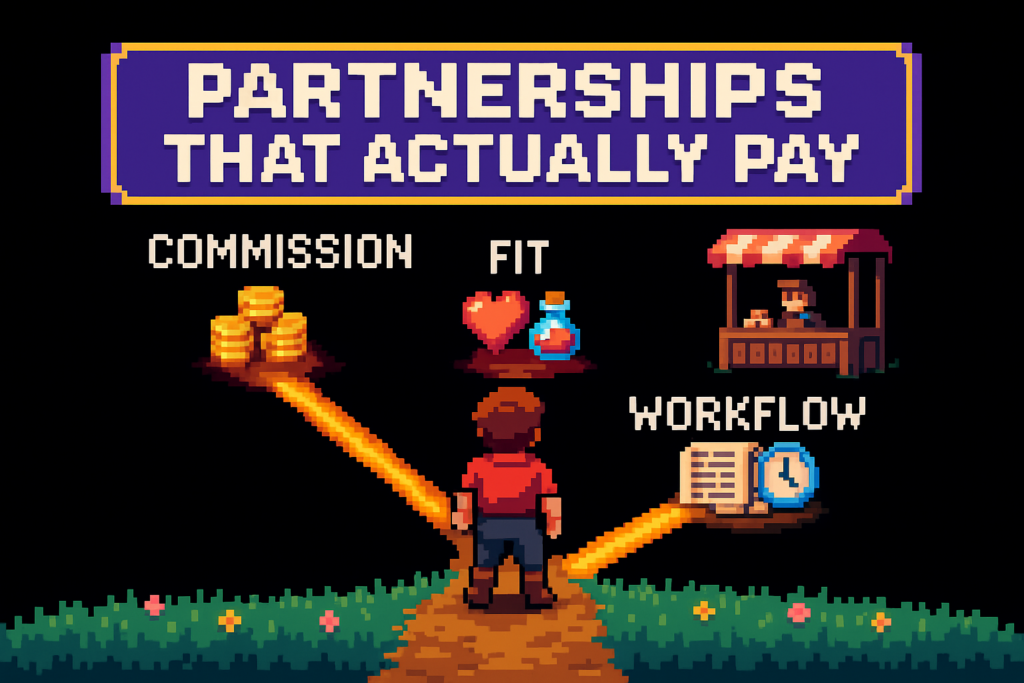
The rest of this guide compares creator affiliate case studies by growth mechanism, not by vanity outcome. Three lenses matter most: commission lift, conversion lift, and workflow lift.
What kinds of affiliate partnership case studies actually matter
Most affiliate revenue examples fit into one of three buckets. Once you sort them that way, the numbers stop looking random.
A blogger with steady traffic doesn’t always need more pageviews. If they’re already recommending products with marketplace deals, a payout-focused example matters more than a traffic growth story. A YouTuber with strong views but weak clicks usually needs a conversion or workflow lesson instead.
Commission lift case studies: same traffic, better payout
This pattern is simple: the creator keeps promoting the same product to the same audience, but earns more per sale.
Usually, the first metric to move is the commission rate. Then EPC rises. Traffic can stay flat and revenue still improves.
Conversion lift case studies: same offer, better content fit
Here, the payout doesn’t change. The offer gets more relevant to the audience, so more clicks turn into purchases.
In most cases, conversion rate moves first. Revenue follows.
Workflow lift case studies: same audience, less revenue leakage
This is the least flashy pattern, and one of the most common. The creator doesn’t change the product or the payout. They fix link placement, calls to action, page structure, or content format.
Often, click-through rate moves first. Then EPC improves because more of the right people reach the right product.
Why mechanism beats niche or audience size
Grouping by niche sounds useful, but it usually hides the lesson. A tech creator and a home office blogger can both win from the same payout change. A beauty creator and a fitness YouTuber can both struggle from poor product alignment.
Think of it like diagnosing a leak in a house. You don’t start with paint color. You start with where the water gets in.
Compare the three case study types
| Case study type | Trigger | First metric affected | Best fit by creator stage | Common blind spot |
|---|---|---|---|---|
| Commission lift | Higher payout on an existing product | Commission rate, then EPC | Creators with steady clicks and low earnings | Assuming Amazon Associates is the ceiling |
| Conversion lift | Better audience-to-product match | Conversion rate | Creators getting clicks but weak sales | Chasing high payouts on low-trust offers |
| Workflow lift | Better link placement or content structure | Click-through rate, then EPC | Creators with recommendations already live | Thinking the only fix is a new partnership |
Myth: more traffic is always the reason affiliate revenue grows.
Reality: many creator partnership wins come from better commissions, stronger fit, or less friction.
Once you know the type of win you’re looking at, the numbers start to make sense.
Case study pattern 1: higher commission wins without more traffic
This is the cleanest pattern to evaluate because the variable is obvious. Same audience. Same product. Better payout.
Baseline case: Amazon Associates performance before the deal
Start with a creator already getting clicks through Amazon Associates. That matters because it proves there’s existing buying intent.
Say a home office creator publishes “best ergonomic chairs for small spaces” and sends 1,200 monthly clicks to Amazon across blog posts and YouTube descriptions. Their traffic is stable. Their click volume is stable. Their earnings are decent, but the standard rate keeps EPC lower than it should be.
That’s a useful baseline because it isolates the bottleneck: payout, not demand.
What changed: elevated marketplace deal on a product already being promoted
Now the creator activates a marketplace deal on a chair brand they already mention. No new content sprint. No niche pivot. No audience rebuild.
That’s the difference between a useful higher-commission case study and a vague success story. The creator didn’t just “work harder.” They changed the economics of traffic they already had.
Lasso’s creator marketplace is built for exactly this move. It complements Amazon Associates, not replaces it. If a product you already promote has an elevated deal available, you can activate the better rate and keep the rest of your setup intact.
What the metrics usually show: commission rate up, EPC up, traffic flat
In this pattern, traffic might not move at all. Clicks might not move much either.
What changes first is the commission rate. Then Earnings per click rises because each converting click is worth more. Revenue goes up even though the top of the funnel looks almost identical.
A simple example:
| Traffic level | Content type | Commission change | EPC change | Outcome |
|---|---|---|---|---|
| Stable, 1,200 monthly clicks | Blog post + YouTube descriptions | Standard Amazon rate to elevated marketplace deal | $0.42 to $0.68 | Higher monthly earnings without more traffic |
That’s why this pattern matters so much for creators with existing product content. If low commission rates are your bottleneck, this is the first place to look before chasing more traffic.
What changed
- Existing product recommendation already had demand
- Creator activated a higher-paying marketplace deal
- Traffic stayed flat
- EPC improved because payout per sale increased
Myth: Amazon Associates is the ceiling for creator affiliate income.
Reality: for some creators, it’s just the baseline.
Start with affiliate partnerships for creators or review your broader setup in the creator monetization guide.
Case study pattern 2: better product alignment wins without a commission increase
Some creator monetization proof has nothing to do with a payout bump. The product finally matches what the audience actually wants.
Baseline case: plenty of clicks but weak purchase intent
This pattern shows up all the time. A creator gets clicks, but purchases lag.
Picture a beauty creator linking a broad “best skincare tools” roundup in every video. The audience clicks because the creator is trusted. But comments and search queries keep circling one issue: sensitive skin, low-irritation routines, and simpler tools.
The clicks are real. The intent mismatch is real too.
What changed: tighter audience-to-product match
The creator stops pushing the broad roundup as the default recommendation. Instead, they feature one product that directly matches the audience’s stated need.
No commission increase. No special deal. Just a tighter match between content promise and product choice.
This is where creator commerce gets practical. The best offer on paper isn’t always the best offer in content. A lower-paying product that fits the audience can beat a higher-paying product that feels off.
What the metrics usually show: conversion rate up before revenue spikes
Usually, conversion rate improves first. More of the same clicks start turning into purchases.
Then EPC rises because each click is now more likely to produce revenue. Over time, total earnings improve even though the commission rate never changed.
A realistic pattern looks like this:
| Traffic level | Content type | Commission change | EPC change | Outcome |
|---|---|---|---|---|
| Moderate, strong clicks from YouTube | Product mentions in tutorials | No change | $0.29 to $0.51 | Revenue grows through better fit |
What changed
- Audience feedback showed a narrower need
- Creator swapped a broad recommendation for a more relevant product
- Conversion rate improved before total revenue did
- Trust stayed intact because the recommendation made more sense
Most creators miss this step: the offer has to make sense for the audience before the payout matters.
If you’re diagnosing weak sales from decent traffic, the creator monetization guide is the better next read. If the fit is there but the partnership isn’t, move to brand deal outreach.
Case study pattern 3: conversion setup wins from better link placement and content format
Sometimes the product is fine and the payout is fine. The path to the click is just messy.
Baseline case: recommendations exist but the path to click is messy
A YouTube creator mentions five products in a review video. All the links are technically there, but they’re buried at the bottom of a long description with no order, no timestamps, and no context.
That setup leaks revenue. Not because the audience doesn’t trust the creator, but because the click path asks too much work from the viewer.
The same thing happens on blogs. A creator writes a strong recommendation post, then hides the affiliate link in a text paragraph instead of using a clear product display or comparison block.
What changed: clearer calls to action and better affiliate placement
The creator cleans up the path:
- Put the most relevant product link near the recommendation.
- Add timestamps so viewers can jump to the product mention.
- Reorder description links by priority.
- Use a monetized landing page or cleaner resource hub for multi-product content.
- On blog posts, use structured displays instead of raw links.
This is where tools matter. Lasso helps creators organize links and displays more clearly. Vidrunner helps YouTube creators generate timestamps, tags, and affiliate links faster, so monetization doesn’t get skipped in the post-upload rush.
What the metrics usually show: click-through rate and EPC both improve
In this pattern, conversion rate on the retailer side might stay similar. Instead, the first lift often happens earlier in the funnel: more people click.
Then EPC improves because more qualified visitors reach the product page. The audience didn’t change. The recommendation didn’t change. The setup got fixed.
A realistic example:
| Traffic level | Content type | Commission change | EPC change | Outcome |
|---|---|---|---|---|
| Strong views, weak link clicks | YouTube review + description links | No change | $0.18 to $0.37 | More clicks and better earnings from same video library |
That’s why workflow case studies matter. Sometimes the fastest revenue lift comes from fixing the path between your recommendation and the click.
What changed
- Links moved closer to the recommendation
- Description structure got cleaner
- Timestamps improved product discovery
- Product display or landing-page formatting reduced friction
Myth: if affiliate revenue is low, the only fix is a new partnership.
Reality: a messy setup can suppress earnings even when the offer is solid.
Case study pattern 4: outreach-driven partnership wins that change the economics
This pattern looks similar to commission lift on the surface, but the source of the win is different. The creator didn’t just activate an existing deal. They started a targeted affiliate conversation.
Baseline case: creator is earning standard rates with no direct relationship
A niche fitness creator already mentions a recovery tool in weekly content. They’re earning standard rates and seeing steady clicks, but there’s no direct relationship with the brand.
That’s a missed opportunity. If the content already proves fit, the creator has more negotiating power than they think.
What changed: a targeted affiliate partnership conversation
Instead of asking for a one-off sponsorship, the creator sends a short affiliate pitch. The message is simple:
- Here’s the product I already mention
- Here’s the content where it appears
- Here’s what my audience asks about it
- Here’s the click volume or engagement signal I’m seeing
- I’d like to discuss an affiliate partnership with better economics
That’s a credible ask because it’s based on proof, not hope. A sponsorship pitch sells reach. An affiliate pitch sells fit plus performance potential.
Here’s a simple template:
Hi [Brand Name],
I already feature [Product] in my [YouTube videos/blog posts] because it fits my audience well. Over the last [time period], it’s come up repeatedly in content and audience questions. I’m currently sending traffic through standard affiliate links, and I’d love to explore a direct affiliate partnership or higher commission structure if there’s a fit. Happy to share examples of existing placements and audience response.
Short. Specific. No inflated media-kit theater.
What the metrics usually show: commission lift plus stronger long-term fit
Usually, the first visible change is the payout. But the bigger win is strategic.
Once a creator has a real relationship, they often get better product info, earlier launches, cleaner tracking, or access to offers that fit their audience better over time. That compounds.
What changed
- Creator used existing content proof as the pitch
- The ask focused on affiliate economics, not a flat-fee sponsorship
- Better commission structure improved earnings
- Relationship quality improved future fit and repeat opportunities
Myth: affiliate partnerships are just smaller brand deals.
Reality: they’re performance relationships, and the best ones keep earning after publish day.
For templates, start with outreach templates and then build your pitch process in brand deal outreach.
Affiliate partnership case studies vs brand deal case studies
A lot of creators compare the wrong things. That leads to bad decisions fast.
What affiliate case studies measure that brand deal stories often miss
Affiliate examples are about performance over time. They track Earnings per click, Conversion rate, Commission rate, click volume, and attributed sales where available.
Brand deal stories usually focus on reach, views, deliverables, audience demographics, and flat fees. Those are useful for sponsorships. They don’t tell you much about whether a recommendation will keep earning next month.
A creator might read about a brand paying $2,000 for one Instagram Reel and assume that’s the benchmark for every partnership decision. Compare that to an evergreen YouTube review that keeps sending buyers for a year. Different model. Different math.
When a brand deal case study is still useful to a creator
Sponsorship stories still matter when you’re learning how to package your audience, negotiate deliverables, or position your niche.
They’re also useful if your current stage is more awareness-driven than conversion-driven. A creator with strong reach but weak purchase intent may need sponsorship income now while building a stronger affiliate engine.
How to tell which model fits your monetization stage
Use this quick comparison:
- If you want upfront cash for a defined deliverable, study sponsorship examples.
- If you want repeat earnings from evergreen content, study affiliate revenue case studies.
- If your audience trusts your recommendations and asks what to buy, affiliate partnerships usually deserve more attention.
- If your content rarely drives product action, flat-fee deals may be easier in the short term.
The better comparison isn’t fee size. It’s whether the content keeps earning after publish day.
The patterns that repeat across strong creator affiliate case studies
Good creator partnership success stories aren’t just exciting. They’re diagnosable.
Clear baseline metrics before any change
A useful case study starts with the numbers before the win:
- traffic or click volume
- content type
- current payout
- current EPC
- current conversion performance
Without that baseline, the outcome is just marketing copy.
One main variable changed at a time
The best examples isolate the cause. They don’t say, “we changed the links, switched the product, published six new posts, and doubled revenue.”
That’s not a case study. That’s a pile of variables.
If one creator explains baseline clicks, the commission change, and the content update that happened first, that’s the example you can actually learn from.
Audience trust shows up before revenue does
This pattern repeats across almost every strong affiliate partnership case study. The audience signals interest before the earnings show up.
You see it in comments. In repeated product questions. In strong watch time on review sections. In blog posts where readers spend time on comparison tables or product blocks.
That’s why some of the best affiliate income growth stories don’t start with a payout change. They start with trust and intent.
The best wins compound; they don’t rely on one lucky post
A good affiliate setup keeps working after publish day. That’s the difference between a repeatable system and a random spike.
Think of it like fixing a loose hinge before the whole cabinet door starts sagging. If your process only works while you can remember every link manually, it’s not a system yet.
Here’s a simple extraction table you can use when reviewing any case study:
| Traffic level | Content type | Commission change | EPC change | Outcome |
|---|---|---|---|---|
| Low, moderate, or high | Blog, YouTube, social, mixed | None, moderate, or major | Flat, modest lift, or strong lift | Revenue, attributed sales, or longer-term fit |
Myth: a big revenue number automatically means the case study is useful.
Reality: if it doesn’t isolate the cause, you can’t apply the lesson.
The goal isn’t more success stories. It’s better ones you can actually evaluate.
How to decide which case study pattern matches your creator business
You don’t need every fix at once. You need the next one.
If your clicks are healthy but earnings are low
Look at payout-focused examples first.
Usually, this means your audience is already taking action, but the economics are weak. Start by checking whether products you already promote have better commission opportunities through marketplace deals or direct affiliate conversations.
A creator with 8,000 monthly blog sessions and steady Amazon clicks probably doesn’t need a new niche. They may need a better deal on products already working.
If your traffic is modest but your audience trust is strong
Look at fit-focused examples.
If your audience asks detailed buying questions, saves recommendation posts, or watches product sections closely, you may have enough trust to earn well without huge scale. Better product alignment often beats a bigger audience with lower intent.
If your content converts unevenly across platforms
Look at workflow examples.
A blog post with clear product blocks may convert well while the matching YouTube video underperforms because the links are buried. Or your video may drive clicks well while your link-in-bio page is cluttered.
That’s an operations problem. Fix the path before you replace the offer.
A creator checklist for choosing your next partnership move
Use this quick scan:
- Check whether your clicks are low, your EPC is low, or your conversion rate is low.
- If clicks are healthy but EPC is weak, investigate higher commission options.
- If clicks are healthy but purchases lag, investigate product fit.
- If recommendations get engagement but link clicks are weak, investigate placement and format.
- If a product already performs well, consider outreach for better terms.
- If you’re on YouTube and publishing fast, use a workflow like Vidrunner so links and timestamps don’t get skipped.
That’s the system. Diagnose the first broken metric, then match it to the right case study type.
FAQ
What is an affiliate partnership case study?
It’s a creator revenue example that explains four things clearly: the baseline, the change made, the metrics affected, and the outcome. A good one shows what the creator was doing before, what changed in the partnership or content setup, which numbers moved first, and what happened next.
How do affiliate partnership case studies differ from brand deal case studies?
Affiliate examples focus on performance metrics like EPC, conversion rate, commission rate, click volume, and attributed sales. Brand deal case studies usually focus on deliverables, reach, views, and flat-fee payouts. One tracks ongoing earning performance, the other tracks sponsored campaign execution.
Which metrics matter most in an affiliate partnership case study?
Start with commission rate, EPC, conversion rate, click volume, and attributed sales where available. Those numbers tell you whether the win came from better payout, better fit, or a cleaner conversion path.
What should creators look for in affiliate partnership examples?
Look for mechanism clarity, audience fit, verification notes, and realistic starting conditions. If the example only gives a big revenue number without showing what changed, it isn’t very useful.
How much can creators realistically increase earnings through better affiliate partnerships?
There’s no fixed number because gains depend on your baseline traffic, product fit, and how large the commission change is. Some creators see modest lifts from cleaner placement, while others see bigger jumps when an already-converting product gets a much better payout.
How long does it take to see results from a new affiliate partnership?
It depends on the mechanism. A commission increase on an existing product can show up quickly because the traffic is already there. Conversion and workflow improvements usually take longer because you need enough clicks to see the pattern clearly.
Do I need a large audience to benefit from higher-commission affiliate deals?
No. Fit and intent often matter more than follower count. A smaller audience that trusts your recommendations can outperform a larger audience with weak buying intent.
Can I use Marketplace alongside Amazon Associates, or do I need to replace my current setup?
You can use Marketplace alongside Amazon Associates. It complements your current setup by adding elevated commission opportunities on selected products, rather than forcing you to replace your standard affiliate workflow.