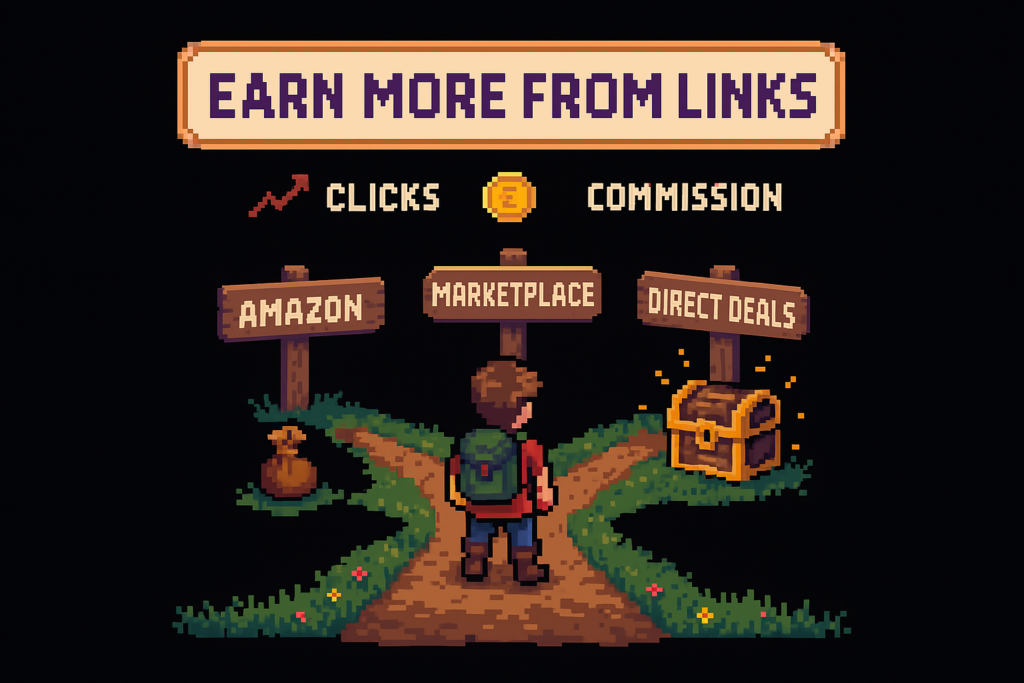
Affiliate income for creators is revenue earned when a creator drives a tracked purchase or action through recommendation links. In practice, earnings usually come down to clicks, conversion rate, commission rate, and average order value.
You recommend a product you actually like. People click. A few sales come through. Then you check the payout and think, that can't be right.
A lot of creators assume the problem is traffic. Sometimes it is. But often, the issue is the math behind the recommendation. Low commission rates, weak buying intent, and poor product fit can shrink earnings fast.
Affiliate income for creators isn't random. It follows a small set of inputs you can measure, improve, and repeat.
How affiliate income for creators actually works
Content creates interest. Interest creates clicks. Clicks send people to a retailer or product page, and some of those people buy. If the link tracks correctly, you earn a commission.
That chain matters because creators often focus on the wrong metric. Views and reach feel exciting. Revenue comes from what happens after the click.
The simplest formula looks like this:
Clicks × conversion rate × commission rate × average order value
Four revenue levers shape most creator affiliate earnings:
| Lever | What it controls | Common problem | Best fix |
|---|---|---|---|
| Traffic | How many people see the content | Not enough qualified visitors | Update proven assets before making new ones |
| CTR | How many people click | Weak placement or vague recommendation | Improve context and link placement |
| Conversion rate | How many clickers buy | Low buying intent or poor product match | Use reviews, comparisons, setup pages |
| Commission rate | How much you earn per sale | Standard rates cap upside | Activate marketplace deals or direct partnerships |
| Product fit | Whether the offer matches audience needs | Forced recommendations hurt trust | Promote fewer, better-fit products |
Two terms come up a lot here:
- Amazon Associates is Amazon's standard affiliate program. You link to Amazon products and earn a set commission when someone buys.
- Earnings per click (EPC) is the average amount you earn for each click on a link. It's one of the fastest ways to compare offers.
A YouTube creator can add a tracked link in a description. A blogger can use a buying guide. A creator on social can send traffic to a curated page through Lasso Pages, monetized landing pages built for affiliate recommendations outside WordPress.
Here's a simple scenario. A creator links to a $40 desk accessory in a video description. If 1,000 viewers click, 5% buy, and the commission is low, the recommendation still worked, but the payout may be small. If that same product has a better deal available through Marketplace, the creator can earn more from the same audience and the same content.
Compare traffic-first thinking with revenue-lever thinking:
| Scenario | Clicks | Conversion rate | Product price | Commission rate | Estimated earnings |
|---|---|---|---|---|---|
| Standard link | 1,000 | 5% | $40 | 3% | $60 |
| Higher-rate deal | 1,000 | 5% | $40 | 8% | $160 |
Same clicks. Same product. Same audience. Different payout structure.
Myth: affiliate income is unpredictable by nature.
Reality: it gets much more stable once you track the inputs instead of staring at the final payout.
If you need the broader business view beyond affiliate links, start with the creator monetization guide. If you're already promoting products and want stronger payout options, explore affiliate partnerships for creators. For official program details, review the Amazon Associates Program.
The affiliate income formula creators should know
Most creators don't need more theory. They need a way to spot which variable is holding back earnings.
The formula breaks down into four practical questions:
- Are enough people clicking?
- Do those clicks come from buyers or browsers?
- Does the product price support meaningful commissions?
- Are you earning the best available rate for that recommendation?
Let's make that concrete.
A creator has a blog post comparing beginner podcast microphones. It gets 800 clicks a month to product pages. At a 3% conversion rate, 24 people buy. If the creator improves the page so the conversion rate rises to 5%, now 40 people buy. No new traffic. No new post. Just better conversion.
That's why commission rate alone doesn't tell the full story.
A low-priced product with a high percentage payout can still underperform a higher-priced product with a lower percentage. The real question is what the offer produces after clicks and conversions.
Compare that to this:
| Offer type | Average order value | Commission rate | Result |
|---|---|---|---|
| Low AOV, high rate | $20 | 10% | Good on paper, limited dollars per sale |
| High AOV, lower rate | $150 | 4% | Lower percentage, stronger payout per sale |
This is where EPC becomes useful. It compresses the messy details into one number: how much a click is worth. If one link earns $0.12 per click and another earns $0.68, you know where to spend your time.
Think of it like fixing a leaky sink before repainting the bathroom. More content volume won't help much if the page already gets clicks and leaks conversions.
If you want a clearer way to spot which links are worth optimizing first, start with pages and videos that already get traffic from search or recurring views. Then compare which recommendations produce the strongest EPC.
Where creators actually get paid: Amazon, marketplaces, and direct partnerships
Most creators start with one source of affiliate revenue and stay there too long.
There are three common ways creators get paid for product recommendations:
- Amazon Associates
- Marketplace deals
- Direct affiliate partnerships
Each one changes the commission-rate lever in a different way.
Amazon Associates is the baseline, not the whole strategy
Amazon Associates is where many creators begin because it's easy to understand. The catalog is huge. Your audience already trusts the checkout flow. You can test a lot of product categories quickly.
That makes it useful. It also creates a ceiling.
A blogger might start with standard Amazon links in a home office roundup and see steady clicks. Then they notice one of those products has a marketplace deal available. They don't need to rebuild the post or replace the recommendation. They just activate a better payout path for that product and keep the rest of the setup intact.
Marketplace adds elevated commissions on products you already promote
Marketplace is Lasso's creator marketplace. It surfaces private brand deals that pay higher commissions on selected Amazon products. It complements Amazon Associates; it doesn't replace it.
The big advantage is speed. No separate application for each deal. No cold outreach just to test whether a better rate exists.
In practice, you can keep your standard links where needed and upgrade specific products where stronger terms are available.
Direct partnerships can pay more, but they add friction
Direct affiliate partnerships make sense when you have clear niche authority and proof that a category converts. They can offer custom terms, better rates, and tighter brand alignment.
They also create work: outreach, approval, negotiation, tracking, and relationship management.
That's fine if the upside justifies it. It isn't fine if you're chasing a slightly higher rate on a product your audience barely cares about.
Myth: Amazon Associates is the only realistic option for creators.
Reality: it's usually the starting point. Many creators increase revenue by layering in marketplace deals and selective direct partnerships.
Most creators miss this step: they compare products, but not payout structures.
Why many creators earn less affiliate revenue than expected
Low earnings usually don't mean affiliate monetization is broken. They mean one of the levers is underperforming.
A creator can add links to dozens of posts and still see weak results if those links sit inside low-intent content, point to cheap products, or use standard commissions with little upside. That's not a motivation problem. It's a systems problem.
More links versus better links is the right comparison here. Hope isn't a monetization strategy.
Low buying intent content sends clicks that don't convert
Discovery content and decision-stage content don't behave the same way.
A broad lifestyle vlog might mention a camera in passing. A dedicated "what's in my filming setup" page attracts people who are already evaluating gear. The second asset usually converts better because the visitor is closer to buying.
Reviews, comparisons, tutorials, and resource pages tend to produce stronger affiliate conversion rates because they answer purchase questions directly. Inspiration content can still help, but it usually needs a tighter bridge to the product.
If your links sit mostly in broad awareness content, don't expect decision-stage conversion numbers.
Standard commission rates cap upside
Some creators do everything right and still feel underpaid. That's often a commission problem, not a content problem.
A post can get healthy clicks. The product can convert well. The audience can trust the recommendation. If the base rate is weak, the payout still feels small.
That's why higher-commission affiliate deals matter so much. They're often the fastest revenue lift because they don't require a new audience or a new content strategy.
A creator with a strong home product review may not need more traffic at all. They may just need a better deal on the same product.
Product mismatch and weak placement reduce trust and clicks
Not every product deserves a link.
If recommendations feel disconnected from the content, people stop clicking. If every caption turns into a generic product dump, trust erodes. That's expensive.
A better approach is tighter context and cleaner placement. A curated setup page using Lasso Pages or a well-placed Product Display inside a relevant article gives your audience a reason to click. It feels useful, not forced.
Here's a common before-and-after. A creator drops the same long product list into every caption and gets weak click-through. Then they switch to a focused page with categories like filming setup, desk gear, and editing tools, each with a short note on why they use it. Fewer total links, more useful clicks.
Myth: more links automatically means more income.
Reality: relevance, trust, and placement usually beat link volume.
Myth: you need a huge audience to earn meaningful creator affiliate revenue.
Reality: product fit, buying intent, and commission structure often matter more than follower count.
Here's what actually works: fix the bottleneck before you publish more links.
Ways to increase affiliate income without sacrificing audience trust
The best gains usually come from optimizing what's already working.
A creator audits their top ten product mentions, updates the highest-intent pages and video descriptions, swaps in stronger offers where available, and tracks which links produce the best EPC over the next month. That's a real system. Random link drops aren't.
The workflow breaks down into four steps.
Start with content that already has clicks and buyer intent
Don't begin with brand-new affiliate content unless your existing library is empty.
Start with posts, videos, and resource pages that already mention products and already attract search traffic, repeat views, or recurring clicks. These are your easiest wins because the audience signal already exists.
A YouTube creator who reviews editing gear every month doesn't need a fresh monetization campaign. They can update old descriptions and pinned comments on the videos that already rank in search. If they use Vidrunner, they can speed up the process of identifying mentioned products and cleaning up affiliate links in those descriptions.
New content creation is slower. Updating proven assets is usually faster and safer.
Improve conversion with stronger recommendation context
Generic "links below" language doesn't help people decide.
Better recommendation context answers three questions fast:
- Why this product?
- Who is it for?
- When should someone buy it?
A creator might replace a vague microphone link with a short note: "If you're just starting, get the USB option. If you're recording interviews or want cleaner audio control, get the XLR setup." That change may reduce random clicks, but it increases qualified clicks. That's what you want.
Use comparison content, setup pages, and product-specific explanations. If you publish on social or YouTube, Lasso Pages can turn scattered recommendations into a structured destination. If you run a site, Product Display placements can make the recommendation clearer and easier to act on.
Better context usually earns more than louder promotion.
Upgrade commission opportunities on products you already recommend
This is the cleanest revenue lift for many creators.
If a product already fits your audience and already converts, don't replace it just because another offer has a flashy rate. First check whether that exact product has a better payout option through Marketplace or a direct partnership.
A creator already recommends a standing desk on their blog and YouTube channel. The recommendation is authentic. The audience responds well. Instead of swapping to a different desk for the sake of commission, they activate a better commission option for the same item where available. Same fit, better economics.
That's the difference between optimization and distortion. You keep trust intact while improving payout.
Build a repeatable review and tracking habit
Stable affiliate revenue comes from review cycles, not luck.
Track four things at minimum:
- Clicks
- Conversions
- EPC
- Top-performing products or pages
Review them monthly or quarterly. Look for pages with strong clicks but weak EPC, and pages with modest traffic but strong earnings. Those patterns tell you where to update copy, placement, or payout structure next.
A creator might notice that one low-traffic buying guide earns more than a high-traffic lifestyle post. That changes what gets updated first. Over time, those decisions build more recurring creator revenue because you're improving proven assets instead of guessing.
When you're ready to scale, the goal isn't more links. It's better revenue per recommendation.
Marketplace and program options creators should compare
Choosing where to earn matters almost as much as choosing what to recommend.
A creator comparing standard Amazon links, a marketplace deal on the same product, and a direct partnership shouldn't default to the highest headline rate. The right choice depends on fit, friction, payout reliability, and how easily the offer fits into existing content.
Here's the clean comparison:
| Option | Best for | Upside | Tradeoff | Typical workflow |
|---|---|---|---|---|
| Amazon Associates | Fast setup, broad testing | Huge catalog, familiar checkout | Standard rates can limit earnings | Create link and publish |
| Marketplace deals | Upgrading products you already recommend | Elevated commissions, no per-deal application | Only available on eligible products | Connect Associates, activate deal, update link |
| Direct affiliate partnerships | Niche authority and custom terms | Highest potential upside and alignment | Outreach, approval, negotiation, management | Pitch brand, agree terms, manage relationship |
Amazon Associates, where it fits and where it falls short
Creators start here for good reason. It's simple, broad, and flexible.
A new creator can test what their audience buys without building a partnership pipeline first. That's useful data. Over time, though, top-performing products may hit a payout ceiling that standard rates can't solve.
Amazon is often the starting point, not the finish line.
Marketplace deals, the easiest path to higher commissions on familiar products
Marketplace is often the fastest upgrade path because it removes the application bottleneck.
A creator logs into Lasso, sees a marketplace deal for a kitchen product already featured in an evergreen post, activates it, and improves the earning potential of that page without rewriting the recommendation. That's a practical win because it changes the payout without changing audience fit.
If you're already recommending the product, a better payout path matters.
Direct affiliate partnerships, best when you want custom terms or niche alignment
Direct deals make the most sense when you have proof.
A niche fitness creator sees repeated conversions in a supplement category. The audience fit is obvious. The creator has enough evidence to justify outreach and ask for custom terms. In that case, the extra operational work makes sense.
If you need help with that process, the next step is learning brand deal outreach and using proven outreach templates.
Creator checklist for choosing affiliate offers worth promoting
Use this checklist before you add or swap any offer:
- Audience fit: Would this feel natural in your content?
- Buying intent: Is the content close to a purchase decision?
- Commission economics: Does the payout justify the effort?
- EPC potential: If data is available, does the click value look strong?
- Product quality: Would you still recommend it without the commission?
- Payout reliability: Is the program consistent and easy to track?
- Integration friction: Can you add it to existing posts, videos, or pages without rebuilding everything?
A creator might get excited about a high-rate offer, then realize the product doesn't match their audience or content style. Passing on that offer is usually the right call. A lower-friction, better-fit option often earns more in practice.
Myth: the highest advertised commission is always the best deal.
Reality: fit and conversion usually beat a flashy headline rate.
Try this instead: compare payout, fit, and friction before you swap links.
FAQ
What is affiliate income for creators?
It's revenue you earn when someone clicks a tracked recommendation link and completes a qualifying purchase or action. Common sources include Amazon Associates, marketplace deals, and direct affiliate partnerships. The payout depends on clicks, conversion rate, commission rate, and product price.
How do creators make affiliate income from content they already publish?
They update existing blog posts, YouTube descriptions, resource pages, and social landing pages with relevant tracked links. Older content with buyer intent often performs better than brand-new content because the traffic and context already exist. In many cases, updating proven assets is faster than starting from zero.
What affects how much affiliate income a creator can earn?
The main variables are clicks, conversion rate, commission rate, average order value, and product fit. Audience trust and buying intent often matter more than raw follower count. A smaller creator with strong purchase-intent content can outperform a larger creator with broad, low-intent traffic.
What is the difference between Amazon Associates income and higher-commission marketplace deals?
Amazon Associates usually pays standard commission rates across a very broad product catalog. Marketplace deals can offer elevated commissions on selected products, often without changing your recommendation strategy. That means the same product mention can earn more if a better payout path is available.
How long does it take to start earning affiliate income as a creator?
If you already have buyer-intent content live, you may see results within days or weeks after updating links and placements. If you're starting from scratch, it usually takes longer because you need content, traffic, and conversion data first. The timeline depends more on content quality and intent than on account age.
Do I need an Amazon Associates account before using Lasso's creator marketplace?
Yes. In the normal workflow, Marketplace complements Amazon Associates rather than replacing it. You connect your Associates account to Lasso, then activate eligible marketplace deals on top of that setup. Standard links can keep earning through Associates while upgraded deals earn elevated rates where available.
Can I use Marketplace alongside my existing affiliate links?
Yes. You can keep your standard affiliate links in place and activate elevated deals only on eligible products. That makes Marketplace a practical upgrade path, not a full rebuild of your monetization setup.
What proof is there that higher-commission deals can increase creator earnings?
The clearest proof is side-by-side math on the same recommendation. If the product, clicks, and conversion rate stay the same, a higher commission structure produces higher earnings. That's why creators should compare actual payout paths instead of assuming all affiliate links pay about the same.